Managing Agent vs Landlord: Who's Responsible for Gas Safety Compliance?
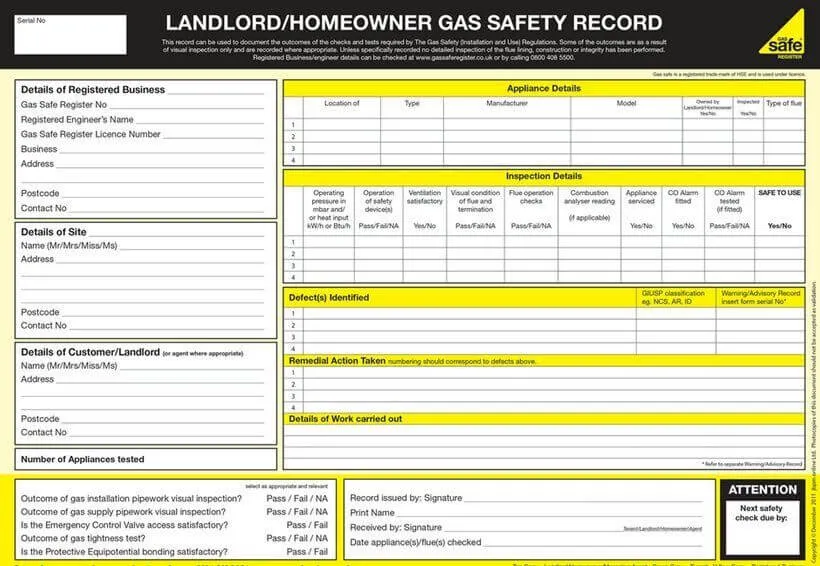
Appointing a managing agent does not transfer your legal duties as a landlord. Understand where the responsibility for gas safety compliance ultimately lies.
The Legal Foundation of Landlord Responsibility
The Gas Safety (Installation and Use) Regulations 1998 place the legal duty for compliance squarely on the landlord. This is a statutory obligation that cannot be delegated away. Whether you manage the property yourself or appoint an agent, you, as the landlord, are ultimately responsible for ensuring all gas appliances, pipework, and flues are safe and that a valid Landlord Gas Safety Record (CP12) is issued annually. The Health and Safety Executive enforces these regulations, and penalties for non-compliance can be severe, including unlimited fines and potential imprisonment.
Understanding this is the first step in managing your risk. The law views the landlord as the duty holder. This means that if something goes wrong, such as a gas leak or carbon monoxide poisoning, the primary legal liability rests with you. A managing agent can perform the administrative and practical tasks, but the legal buck stops with the property owner.
The Role of a Managing Agent
A managing agent acts on your behalf to handle the day-to-day operations of your rental property. In the context of gas safety, their role is typically to arrange the annual gas safety inspection and servicing by a Gas Safe registered engineer. They should then ensure the CP12 certificate is obtained and distributed correctly to the tenant and any relevant parties, and keep accurate records.
This delegation of tasks is common and practical, but it is precisely that: a delegation of tasks, not a transfer of legal responsibility. The agent is your representative. If they fail to book the inspection, lose the certificate, or hire an unregistered engineer, the legal breach is still yours. Therefore, the relationship must be built on clear communication and a robust contractual agreement. If the flat is heated by a boiler in a shared plant room, our guide to who services a communal boiler in a block of flats explains how the same split works for shared plant.
What Your Management Agreement Must Clarify
Your contract with the managing agent is your primary tool for defining roles and safeguarding your position. It should explicitly state who is responsible for each specific gas safety duty. Avoid vague language. The agreement should clearly confirm that the agent will: arrange the annual service and inspection by a Gas Safe registered engineer; secure the CP12 certificate; provide a copy to the tenant within 28 days of the check; and provide you with a copy for your records.
Furthermore, the agreement should outline the process for reminders, what happens if a tenant refuses access, and how emergency gas safety issues are handled. It should specify that the agent must use competent, registered engineers and that all records will be maintained for at least two years. Having these duties contractually assigned gives you recourse if the agent is negligent, but it does not absolve you of your overarching legal duty to ensure compliance is met.
Maintaining Oversight and Control
Even with a capable agent, proactive oversight is essential. Do not adopt a completely hands-off approach. You should request and file copies of every CP12 certificate as soon as it is issued. Set calendar reminders for the renewal date a few weeks in advance and check with your agent that the booking is scheduled. This simple step provides a safety net.
You should also verify that the engineer or company used by your agent is on the Gas Safe Register. You can do this easily online. Ask for the engineer's registration number from the certificate and check it. This due diligence demonstrates you are taking reasonable steps to fulfil your duty. Open a direct line of communication with your agent regarding compliance matters, ensuring you are notified immediately of any issues, such as safety defects or access problems.
What Happens If Things Go Wrong?
If a managing agent fails to organise the gas safety check, the liability for the missing certificate remains with you as the landlord. In the eyes of the law, you have not met your duty. Your first action would be to refer to your management agreement, which should stipulate the agent's obligations and any remedies for their failure.
However, you must also take immediate steps to rectify the situation to protect your tenants and limit your liability. This may involve instructing a Gas Safe registered engineer directly to conduct the overdue inspection. The cost of this emergency action may be recoverable from the agent depending on your contract, but your primary focus must be on restoring compliance and safety without delay.
Frequently asked questions
Can I transfer legal responsibility for gas safety to my managing agent?
No, you cannot transfer the core legal responsibility. The Gas Safety Regulations place the duty firmly on the landlord. A managing agent can be contracted to perform the tasks, but you remain ultimately liable for ensuring a valid CP12 is in place each year.
What key points should be in my management agreement for gas safety?
The agreement must explicitly state the agent will arrange the annual inspection by a Gas Safe engineer, obtain the CP12, issue it to the tenant within 28 days, and provide you a copy. It should also cover procedures for access issues and record-keeping for at least two years.
How can I, as a landlord, ensure my agent is compliant?
Maintain active oversight. Keep your own diary reminder for the CP12 renewal date. Request and securely file copies of all certificates. Verify the engineer's Gas Safe registration number online. Have clear communication channels with your agent specifically for compliance matters.