What Happens During a Boiler Service Visit, From Arrival to Paperwork
A professional boiler service follows a precise sequence. This guide walks you through each step, from the engineer's arrival to the final safety certificate.
This follows a typical service visit in the order it happens, from the questions the engineer asks on arrival to the paperwork you are left with. For the full list of checks every service should include, see our guide to what a boiler service should include.
Arrival and Initial Consultation
Your engineer will arrive at the scheduled time and introduce themselves. They will first ask you a few brief questions about the boiler's performance over the last year. This is your opportunity to mention any issues like odd noises, fluctuations in water temperature, or changes in heating efficiency. The engineer will then explain the service process and ensure the work area is clear and safe before beginning.
Visual Inspection and Safety Checks
The first hands-on step is a thorough visual inspection. The engineer will check the boiler's exterior for any signs of damage, corrosion, or leaks. They will examine the flame viewing window to ensure the burner is operating correctly and inspect the surrounding area for adequate ventilation. A key safety check involves verifying the operation of the boiler's safety devices, such as the pressure relief valve, to ensure they would function correctly in an emergency.
Internal Component Examination
With the boiler casing safely removed, the engineer will inspect the main internal components. This includes the heat exchanger, burner, main injector, and spark probe. They will look for any signs of soot, corrosion, or debris that could affect performance. The gas valve will be checked for correct operation and settings. Any build-up found will be carefully cleaned away to ensure optimal combustion and heat transfer.
Combustion Analysis and Flue Check
A crucial part of the service is testing the combustion gases. Using a digital flue gas analyser, the engineer will measure the levels of carbon monoxide, carbon dioxide, and oxygen in the exhaust. This confirms the boiler is burning fuel safely and efficiently. They will also inspect the entire flue system, both inside and outside your property, to ensure it is securely fitted, unobstructed, and safely terminating.
Functional Testing and System Checks
The engineer will then test the boiler's operation through its full cycle. They will check the ignition sequence, gas pressure at the meter and appliance inlet, and water pressure within the system. The operation of all controls, including thermostats and programmers, will be verified. Finally, the engineer will check the system's water quality and may recommend a powerflush if significant sludge or magnetite is present, though this is a separate procedure.
Final Steps and Documentation
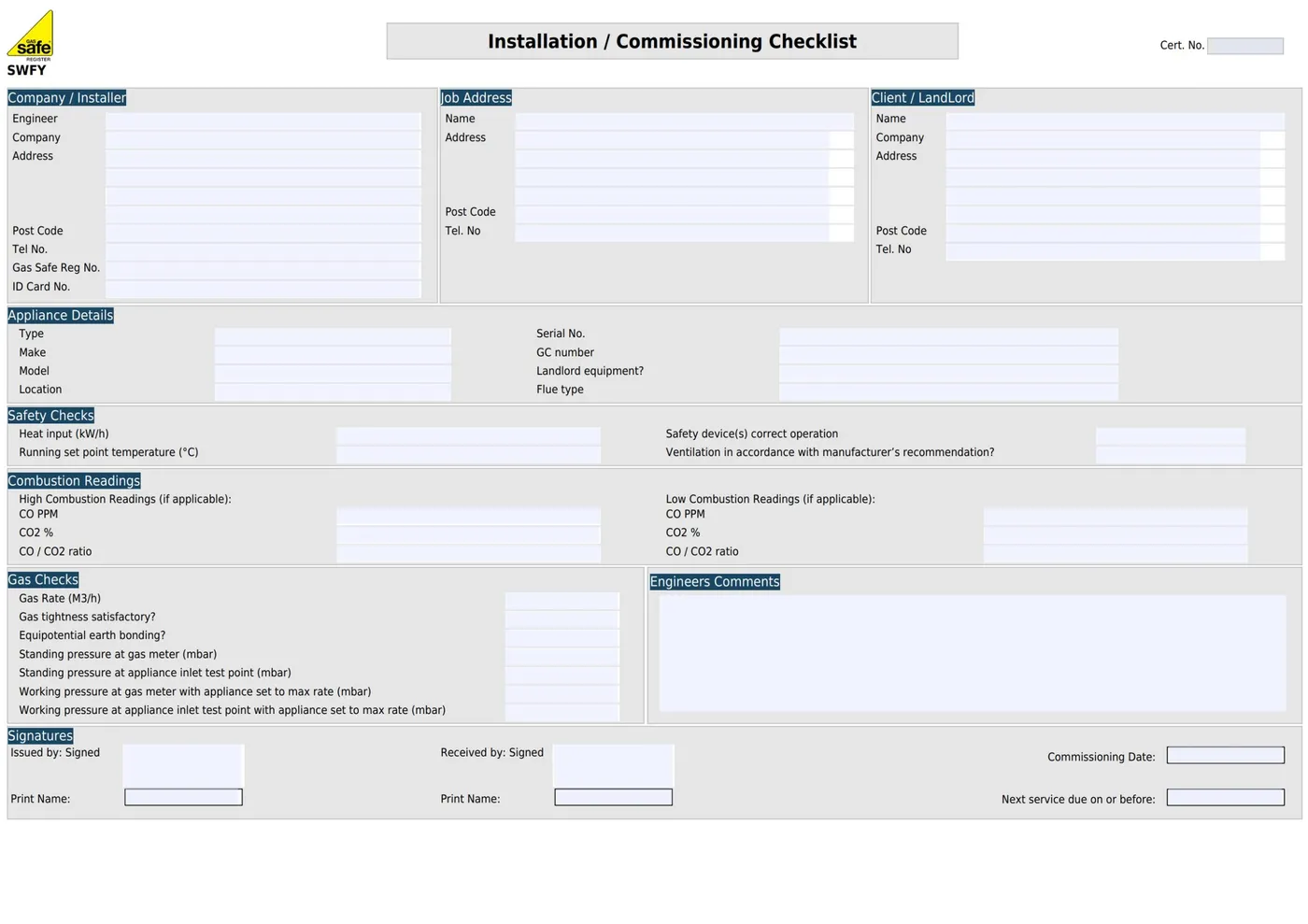
After reassembling the boiler casing, the engineer will provide you with a verbal summary of their findings. They will explain any minor issues noted and any recommendations for future maintenance. For landlords, a Landlord Gas Safety Record (CP12) will be completed on the spot if the appliance passes all checks. You will receive a copy of this certificate, and the engineer will log the service details in the boiler's benchmark logbook for a complete historical record.
Frequently asked questions
How long does a standard boiler service take?
A thorough annual service typically takes between 30 and 60 minutes. The exact duration depends on the boiler's type, age, and condition, as well as its accessibility. Complex systems or those requiring more cleaning may take slightly longer.
Do I need to be at home for the boiler service?
Yes, an adult must be present to grant the engineer access, answer initial questions about the boiler's performance, and receive the safety documentation and verbal report at the end of the visit. This is a standard requirement for all servicing appointments.
What is the difference between a service and a safety check?
A full service includes a comprehensive safety check, but goes much further. A service involves cleaning key components, testing combustion efficiency, and checking all internal parts. A basic safety check verifies the appliance is safe to operate but does not include this detailed cleaning and analysis.